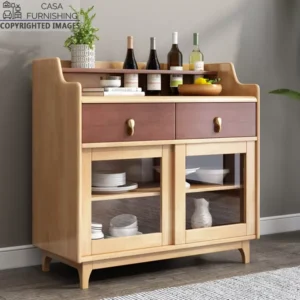
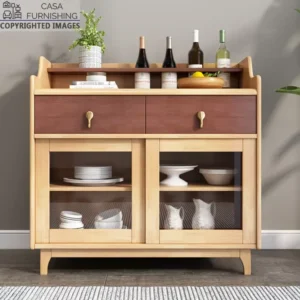
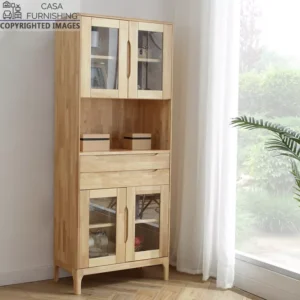
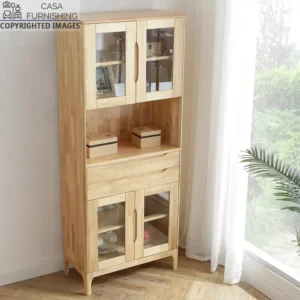
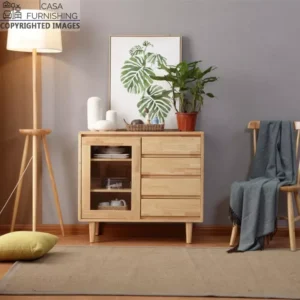
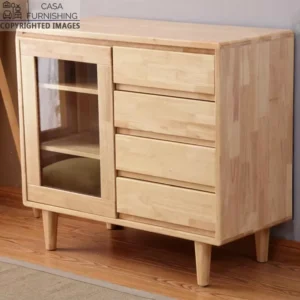
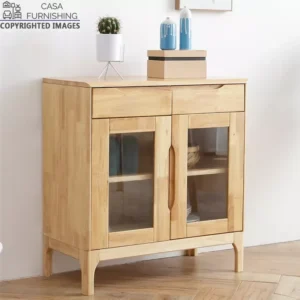
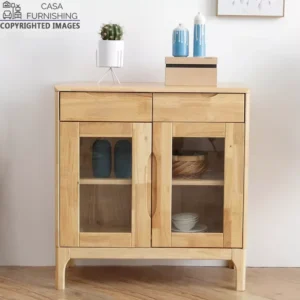
Showcase your treasures with Casa Furnishing's stunning display units and modern glass display cabinets. Explore our collection of wooden display cabinets with glass doors, perfect for adding style and functionality to your space. Discover the ideal display cabinet design to elevate your home decor
The Curator of Your Home: More Than Just a Display Unit
In the grand narrative of Indian interior design, few pieces of furniture hold as much cultural weight as the display unit. It is not merely a storage solution; it is the curator of your family’s history, a stage for your achievements, and a silent guardian of your most cherished heirlooms. Whether you call it a Living Room Cabinet, a showcase, or a curio cabinet, its function remains timeless: to frame the beautiful while concealing the clutter. At Casa Furnishing, we believe that a wooden display cabinet should be as compelling as the objects it holds. In an era dominated by fleeting trends and disposable fast furniture, we stand firmly rooted in the permanence of Sheesham wood, crafting units that are designed not just to occupy space, but to define it.
The modern Indian living room is a multi-functional hub—a space for entertainment, relaxation, and social gathering. As such, the humble shelf has evolved into a sophisticated architectural element. A well-placed display unit bridges the gap between utility and art, transforming an empty corner into a focal point of visual interest. It answers the perennial question of "where to put things" with elegance, offering a sanctuary for your books, travel souvenirs, and fine crockery. When you choose a solid wood piece from our collection, you are investing in a legacy of craftsmanship that resists the wear of time, ensuring that your home’s story is told on a foundation of strength and beauty.
The Evolution of the 'Showcase': A Cultural Icon
To understand the significance of the modern display cabinet, one must look back at its lineage in the Indian home. Historically, the 'Glass Almirah' or the 'Showcase' was a symbol of status and pride in Indian households. It was the designated spot for the family’s finest possessions—glittering brassware, intricate dolls from travels, and the ceremonial dinner set that only came out during Diwali. This furniture piece was often heavy, imposing, and darkly stained. Today, the design language has shifted towards openness and breathability, yet the emotional core remains unchanged. We have reimagined this classic concept for the contemporary apartment, blending traditional durability with sleek, space-saving profiles.
The transition from the bulky, opaque cabinets of the past to the airy, glass-fronted display units of 2025 reflects a broader shift in our lifestyle. We now seek transparency and light. A TV Showcase or a tall display tower is no longer just about storage volume; it is about 'visual editing.' It allows you to declutter your visual field while keeping your treasures dust-free and secure. This evolution is also practical; modern Indian homes often face space constraints, necessitating vertical storage solutions that maximize floor area without overwhelming the room visually. Our designs pay homage to this history by retaining the grandeur of solid wood while adopting the clean lines and ergonomic proportions required for modern living.
Biophilic Design & The Sheesham Standard
In the world of interior design, 'Biophilia'—our innate human tendency to seek connections with nature—is the defining trend of the decade. Bringing the outdoors in is not just about placing a potted plant in the corner; it is about the materials that surround you. This is where a Sheesham wood display unit becomes superior to any engineered alternative. Unlike particle board or MDF, which are essentially glued sawdust, Sheesham (Indian Rosewood) is a living, breathing material. Its rich grain patterns, varying from deep chestnut to golden amber, introduce an organic texture to your living room that synthetic laminates simply cannot replicate.
The tactile experience of a solid wood display cabinet grounds a room. In a high-tech world of flat screens and plastic gadgets, the presence of natural wood provides a necessary psychological balance, creating a sense of calm and warmth. This is the essence of "Nature-Infused Living Room Design." Furthermore, Sheesham is native to the Indian subcontinent, making it climatically suited to our varying humidity levels. It seasons well, resists warping better than imported softwoods, and ages gracefully, developing a richer patina over the years. When you install a Casa Furnishing unit, you are not just buying furniture; you are bringing a piece of the forest into your home, creating a sustainable, non-toxic environment that promotes well-being and connects you to the natural world.
The Scientific Superiority of Sheesham Wood: Building Cabinets That Last Generations
For a specialized piece like a display unit—a cabinet designed specifically to hold weight, often behind a glass display cabinet front—the choice of material is not an aesthetic preference; it is an engineering decision. The primary enemy of any long-term storage unit is deflection, or ‘shelf sag,’ which occurs when the material cannot handle the sustained, heavy load of books, crockery display unit items, or glassware. At Casa Furnishing, we use 100% genuine Sheesham wood precisely because its molecular structure provides the tensile strength and dimensional stability that no engineered wood product can match. Understanding this material science is the key to appreciating the true value and longevity of your investment.
The Janka Hardness Test: Why Sheesham Shelves Never Sag
When evaluating the fitness of wood for load-bearing furniture, we rely on the Janka Hardness Scale. The Janka test measures the force required to embed a steel ball half its diameter into the wood, providing a quantified metric for its resistance to denting, scratching, and wear. Sheesham wood (Indian Rosewood or *Dalbergia sissoo*) consistently registers an impressive Janka Hardness rating, typically ranging from 1,400 lbf to over 1,800 lbf. To put this in perspective, softer woods, commonly used in cheap imports, barely cross the 1,000 lbf mark.
This extreme hardness is directly proportional to the wood’s density (around $\text{770 kg/m}^3$), a trait that is crucial for structural integrity. For your **wooden display cabinet**, this high Janka score translates directly into two non-negotiable benefits:
Superior Load-Bearing Capacity: The density ensures that shelves can support significant weight—such as an extensive library or a collection of heavy antiques—without the threat of permanent **shelf sag** or bending over decades of use.
Resistance to Wear: The surface resists the minor dings and scratches that come from daily interaction, like sliding a vase or knocking an item, ensuring your **modern display cabinet** maintains its pristine finish longer.
When considering a **Sheesham vs MDF for display unit** debate, the Janka score alone settles the argument. MDF (Medium Density Fibreboard) offers zero structural integrity under sustained load and is guaranteed to buckle, causing a visible dip that ruins the clean lines of the furniture. Choosing solid Sheesham is the only way to ensure the long-term structural integrity of your vertical storage.
Beyond Density: Preventing Warping in Display Cabinets in India
Strength alone is not enough; stability is paramount, especially given the dramatic shifts in humidity across India’s seasons. A wood’s natural strength can be compromised if it is not prepared correctly—a pitfall that cheap furniture manufacturers frequently ignore. The key to our promise of quality lies in the meticulous seasoning process. Green wood contains high moisture content (MC) which, if left untreated, will cause the timber to expand, shrink, twist, and eventually lead to **warping in display cabinets** once they are placed in a climate-controlled home.
At Casa Furnishing, we strictly utilize the Kiln-Dried Sheesham Wood technique. Kiln-drying is an accelerated, controlled process that reduces the wood’s moisture content to an optimal, stabilized level—typically between $8\%$ to $12\%$—making it dimensionally stable and perfectly acclimatized for indoor furniture use. This process locks the wood into its intended shape, making it highly resistant to swelling during the monsoon and shrinking during the dry winter heat. This commitment to proper seasoning eliminates the risk of joint failure, loose glass panels, or doors that refuse to close—common problems in improperly treated wood and a major reason why solid wood display cabinets don't sag or split. This meticulous preparation is what differentiates our furniture as the best value for money solid wood display unit India has to offer, guaranteeing an antique of tomorrow.
Comparative Performance for Display Unit Construction
Factor
Sheesham Wood (Solid Hardwood)
MDF/Particle Board (Engineered)
Load-Bearing/Shelf Sag
Excellent. High Janka rating prevents long-term deflection.
Poor. Highly prone to permanent sagging under weight.
Moisture/Humidity Resistance
Good (when Kiln-Dried). Highly stable against Indian climate variation.
Very Poor. Swells irreversibly on contact with moisture/high humidity.
Value Proposition
High Initial Cost, but **Investment-Grade Lifetime Value**.
Low Initial Cost, but **Zero Resale/Long-Term Value**.
In the realm of cabinetry, strength is non-negotiable. While Sheesham may be a slightly higher investment than other materials, its mechanical properties—its inherent durability, density, and stability from proper seasoning—ensure your display unit remains flawless, functional, and valuable for decades. This is the difference between purchasing a piece of furniture and owning a family heirloom.
To ensure you are purchasing authentic, high-quality material, always ask about the wood's process. The simple question, How to check quality of Sheesham wood?, should lead to a clear answer regarding its weight, distinct grain, and whether it has been kiln-dried.
Mastering the Layout: Dimensions, Configurations & Spatial Flow
A display unit is not an island; it is an architectural component that must converse with the rest of your room. In the context of modern Indian apartments, where square footage is often at a premium, the difference between a cluttered room and a curated sanctuary lies in the *configuration* of your furniture. Choosing the right display cabinet with glass doors requires more than just measuring a blank wall; it requires an understanding of "negative space," traffic flow, and visual weight. At Casa Furnishing, we offer configurations that range from imposing floor-to-ceiling libraries to sleek, low-profile consoles, ensuring there is a perfect geometric fit for your specific floor plan.
The Mathematics of Elegance: Standard Dimensions for Indian Homes
One of the most frequent queries we address is regarding the "ideal" size. While "custom" is always an option, there are ergonomic standards that define comfort and utility. A standard modern display cabinet typically has a depth of **12 to 15 inches**. This is the "Goldilocks" zone—deep enough to hold large coffee table books, dinner plates, and artifacts, but shallow enough to not encroach into your walking path.
Height is where you can play with perception. In a room with standard 9-foot ceilings, a tall showcase unit (approx. 72-80 inches) draws the eye upward, creating an illusion of vertical grandeur and making the room feel larger. Conversely, a lower, horizontal unit (like a sideboard console) can ground a space, perfect for placing a television or a large piece of art above.
Quick Reference: Ideal Dimensions for Display Units
Unit Type
Ideal Depth
Primary Usage
Bookshelf / Library
10" - 12"
Standard paperbacks and hardcovers. Deeper shelves waste space here.
Crockery Unit
16" - 18"
Dinner plates (dia 11-12") need clearance behind glass doors.
Curio / Artifacts
12" - 14"
Versatile depth for vases, photo frames, and collectibles.
Room Divider
12" - 15"
Open on both sides; used to separate Living and Dining areas.
The "Dust Factor": Open vs. Closed Configurations
Let’s address the elephant in the room: Dust. In India, dust is an inevitable reality. While open shelving (the Pinterest aesthetic) looks airy and beautiful, it requires high maintenance. For most Indian homes, the display cupboard with glass doors is the superior practical choice. It offers the best of both worlds—visibility without vulnerability. Your precious bone china or intricate Lego masterpieces remain visible to guests but sealed away from dust, grime, and curious toddlers.
A popular hybrid configuration we recommend is the "80/20 Rule": 80% visible display behind glass (top section) and 20% concealed storage behind solid wood doors (bottom section). This layout is incredibly functional. The top displays your beauty; the bottom hides the "ugly" necessity—old magazines, cables, board games, or extra cutlery that you don’t want on show. This structure also visually anchors the piece, making it feel stable and grounded.
Strategic Placement: Solving the "Dead Corner"
Layout is about unlocking potential. Every living room has a "dead corner"—that awkward space where two walls meet that usually ends up collecting dust bunnies. A Corner Display Unit is the ultimate space-saving hack. By utilizing the vertical volume of a corner, you add significant storage without eating into the functional footprint of the room.
For open-concept homes (common in metro cities like Bangalore, Mumbai, and Delhi), a free-standing display unit can act as a partition wall. Placing a sturdy, dual-sided open shelf between your TV Unit with Storage area and your dining table creates a psychological boundary between "entertainment" and "eating" zones without blocking light. This architectural hack defines spaces while maintaining the airiness of the apartment.
Ergonomics: The "Golden Zone" of Display
Ergonomics isn't just for office chairs; it applies to how you interact with your storage. In retail design, there is a concept called the "Golden Zone"—the area between your waist and eye level. This is where human attention naturally falls. When configuring your display cabinet for crockery or artifacts, place your "Hero Pieces"—the items you are most proud of—in this zone (approx. 30 inches to 60 inches from the floor).
Items placed too high (above 6 feet) are often ignored or require a stool to access, making them perfect for decorative items you rarely need to touch. Items placed too low (below knee level) are physically harder to access. Therefore, use the bottom drawers or shelves for heavy items or things you don't need daily access to, ensuring your interaction with the unit remains comfortable and strain-free.
Defining Your Aesthetic: Colonial Grandeur or Modern Minimalism?
A display unit often sets the tone for the entire room. Because of its height and visibility, it acts as a "style anchor." At Casa Furnishing, our design philosophy is bifurcated into two distinct schools of thought, each catering to a specific architectural vibe found in Indian homes. Choosing between them is not just about taste; it is about coherence with your existing space.
1. The Colonial Heritage: Timeless Elegance
This style pays homage to India’s rich history of carpentry. If your home features heavy drapes, warm lighting, or traditional art, a wooden display cabinet with "Colonial" detailing is your perfect match.
Key Features: Look for cornices (crown moulding) at the top, plinth bases, and intricate jaali work or brass hardware. The doors often feature bevelled glass panes framed by thick wood.
The Vibe: It feels substantial and grounded. This is the classic "Grandmother’s Almirah" reimagined for the 21st century—perfect for displaying leather-bound books, antique brassware, or a crockery display unit full of family heirlooms.
2. The Modern Minimalist: Clean & Contained
For the contemporary apartment with clean white walls and open floor plans, "less is more." A modern glass display cabinet strips away the ornamentation to focus on geometry and the natural grain of the Sheesham wood itself.
Key Features: Straight lines, handle-less push-to-open doors, and tapered legs that lift the unit off the floor, creating a sense of visual lightness.
The Vibe: This style acts as a "frame" rather than a statement piece. It allows the contents—whether they are modern sculptures or colorful travel souvenirs—to take center stage without fighting for attention.
The Art of the Finish: Honey, Walnut, or Teak?
The soul of Sheesham wood is revealed through its finish. Unlike paint which masks the material, our premium stains penetrate the wood to highlight its unique grain patterns (the "cathedral" arches and ribbons). Choosing the right finish is critical for blending the new unit with your existing furniture.
Finish Selection Guide
1. Honey Finish (Natural):Best for: Small rooms or spaces with limited natural light.
The Honey finish is the lightest option. It celebrates the natural golden-amber hues of the sapwood and heartwood contrast. It reflects light, making a massive display cupboard with glass doors feel airy and less imposing. It pairs beautifully with pastel wall colors and vibrant upholstery.
2. Walnut Finish (Dark Brown):Best for: Formal living rooms and dining areas.
The Walnut finish offers a deep, chocolatey tone that exudes luxury and sophistication. It unifies the grain, creating a more consistent look. This is the preferred choice for a display cabinet contemporary setting where you want high contrast against light-colored walls (cream or beige).
3. Teak Finish (Warm Reddish-Brown):Best for: Traditional Indian interiors.
This finish mimics the classic reddish warmth of old-school Burma Teak. It bridges the gap between Honey and Walnut, offering a warm glow that looks stunning under warm yellow lighting (3000K). It is the safest bet if you are matching existing traditional furniture.
The "Glass Factor": Clear vs. Frosted
The glass you choose changes the function of the unit.
Clear Tempered Glass is the standard for a glass display cabinet living room setup. It offers zero concealment—what you see is what you get. It demands that you keep the interior tidy.
Textured/Frosted Glass is a forgiving alternative. It obscures the details of the contents while still allowing light to pass through. This is an excellent choice for the lower panels of a unit or for those who want to store semi-messy items (like stacks of board games or files) without creating visual clutter.
The Interior Ecosystem: Creating a Cohesive Living Room
A display unit in living room setups rarely stands alone. It is part of a larger "furniture family." To achieve a professionally designed look, one must consider the "Visual Rhythm" of the room—how different pieces of furniture speak to each other in terms of height, material, and finish. At Casa Furnishing, we design our collections to be modular and complementary, allowing you to curate a space that feels collected, not just decorated.
Pairing Perfection: What Goes with Your Display Unit?
1. The Entertainment Duo:
The most natural companion to a vertical display cabinet is a horizontal entertainment center. Placing a tall TV Showcase or console adjacent to your display unit creates an "L-shaped" or symmetrical configuration that frames your media wall. This balance is crucial; the height of the display unit offsets the low profile of the TV stand, preventing the wall from looking bottom-heavy.
2. The Foyer Statement:
In modern Indian apartments, the entrance foyer is often neglected. A slim display wood cabinet placed here can serve as a sophisticated "drop zone" for keys and mail, while showcasing welcoming artifacts. If space permits, pairing this with a functional Shoe Cabinet in matching Sheesham wood creates a seamless transition from the dusty outdoors to the sanctuary of your home.
The Energy of Placement: Vastu Shastra for Display Units
In the Indian context, the placement of heavy furniture is governed not just by aesthetics, but by the flow of energy (*Prana*). Vastu Shastra offers specific guidelines for **display living room cabinets** to ensure prosperity and stability in the home.
Vastu Compass for Furniture
1. Weight Distribution (South-West Zone):
According to Vastu, the South and West directions represent stability and the "Earth" element. Therefore, heavy items like a floor-to-ceiling wooden display cabinet loaded with books should ideally be placed in the South-West corner of the living room. This placement is said to "ground" the energy, providing stability to the head of the family.
2. Light & Transparency (North-East Zone):
The North and East directions should be kept light and open to allow positive energy to enter. If you must place a unit here, opt for a lightweight glass display cabinet modern design. Ensure it is not cluttered and is used primarily for lightweight items like crystals or deities, rather than heavy encyclopedias.
3. The Reflection Rule:
If your display unit features large glass panels or mirrors, ensure it does not face the main entrance directly, as this is believed to bounce positive energy back out of the house. Instead, position it so the glass reflects a beautiful view or a calm part of the room.
By aligning your furniture with these ancient principles, you create a space that feels intuitively "right"—a harmony that guests feel the moment they walk in, even if they can't pinpoint why.
The Owner's Manual: Caring for Your Sheesham Masterpiece
Owning a solid wood display cabinet is a commitment to quality. Unlike plastic or metal, Sheesham wood is a natural material that responds to its environment. With minimal but correct care, your Living Room Cabinet will not only last a lifetime but will develop a richer, deeper patina as it ages.
The 4 Commandments of Wood Care
1. Dust with Devotion: Use a soft, dry microfiber cloth. Avoid feather dusters as the quills can scratch the finish. For intricate jaali work, use a soft-bristled paintbrush to dislodge dust from corners.
2. The Sunlight Rule: Never place your wooden display cabinet in direct, harsh sunlight. Prolonged UV exposure can fade the finish and cause the wood to dry out excessively, leading to hairline cracks.
3. Moisture Management: While our wood is kiln-dried, extreme humidity changes can still affect it. Keep the unit away from damp walls and AC vents. Always use coasters if you place drinks on the open shelves of a TV Showcase.
4. Nourish Annually: Once a year, treat the wood with a high-quality beeswax or furniture oil (avoid silicone-based sprays). This "feeds" the grain and restores its natural luster.
Frequently Asked Questions (FAQ)
Everything you need to know about buying a display unit online in India.
1. Is the unit made of 100% solid Sheesham wood?
Yes. At Casa Furnishing, we use 100% solid Sheesham wood (Indian Rosewood) for the main structure. We do not use particle board or MDF for the frame, ensuring high load-bearing capacity for your books and crockery.
2. Can I customize the size or finish of the display cabinet?
Absolutely. Since we are manufacturers, we offer customization on dimensions and finishes (Honey, Walnut, Teak). Please contact our support team with your requirements for a custom quote.
3. Does the glass come included? Is it safe?
Yes, high-quality glass panels are included and pre-installed. We use standard thickness glass that is safe for home use. For shipping, we use crate-packing to ensure zero breakage.
4. Will the shelves sag under the weight of heavy books?
No. Sheesham wood has a high Janka hardness rating. Our solid wood shelves are designed to hold heavy loads like encyclopedias and dinner sets without bending, unlike engineered wood options.
5. How do you protect against termites and borers?
All our wood undergoes a rigorous 3-step chemical treatment process and kiln drying before manufacturing. This makes the furniture resistant to termites, borers, and pests.
6. Does the unit require assembly?
Most of our display units are delivered as pre-assembled, single-piece units for maximum structural integrity. However, some larger units may require minimal leg attachment, which is a simple DIY process.
7. What is the delivery time for my location?
We ship pan-India. Standard delivery takes 2-3 weeks as each piece is finished to order. Custom orders may take slightly longer.
8. Is Cash on Delivery (COD) available?
We offer various payment modes. Please check the checkout page for the latest COD eligibility in your pincode area, or opt for secure online payment methods.
9. What if the product is damaged during transit?
We have a "No-Questions-Asked" replacement policy for transit damage. Open the package while the delivery person is present, take photos/videos, and contact us immediately for a free replacement.
10. How do I choose the right finish for my room?
Choose Honey for small/dark rooms to add brightness. Choose Walnut for a formal, luxurious look. Choose Teak for a traditional, warm aesthetic. You can ask us for real wood swatches photos if unsure.
11. Can I use this unit in the kitchen?
Yes, many customers use our Cabinets as crockery units in the dining area or kitchen. Ensure it is not placed directly next to a stove or sink to avoid heat/water damage.
12. Is there a warranty?
Yes, we offer a 1-year warranty against manufacturing defects and termite/borer issues.
13. Do you offer EMI options?
Yes, we have partnered with major banks and payment gateways to offer easy No-Cost and Low-Cost EMI options.
14. Can I add lighting inside the cabinet?
Standard units do not come with lights, but we can drill a cable management hole upon request so you can easily install LED strip lights yourself.
15. What makes Casa Furnishing different from other websites?
We are manufacturers, not just a marketplace. When you buy from us, you cut out the middleman, getting factory-direct prices for premium hand-crafted Sheesham furniture.
Invest in a Legacy
A display unit is the stage for your life’s story. Don’t let your precious memories sit in cardboard boxes or collect dust on open, sagging shelves. Give them the home they deserve. Explore our exclusive collection of solid wood display cabinets today and bring home a piece of art that organizes your life.